![[Un]Churned by Gainsight](https://substackcdn.com/image/fetch/$s_!7AoO!,w_120,h_120,c_fill,f_webp,q_auto:good,fl_progressive:steep/https%3A%2F%2Fsubstack-post-media.s3.amazonaws.com%2Fpublic%2Fimages%2Ffe2167ac-0bcf-4575-9712-8d5ef3588851_300x300.png)
![[Un]Churned by Gainsight](https://substackcdn.com/image/fetch/$s_!hKlf!,e_trim:10:white/e_trim:10:transparent/h_72,c_limit,f_auto,q_auto:good,fl_progressive:steep/https%3A%2F%2Fsubstack-post-media.s3.amazonaws.com%2Fpublic%2Fimages%2Fe14b36dd-52b9-48a3-9f93-3f6a459d55ff_1344x256.png)
![[Un]Churned's avatar](https://substackcdn.com/image/fetch/$s_!vkJ0!,w_108,h_108,c_fill,f_webp,q_auto:good,fl_progressive:steep/https%3A%2F%2Fsubstack-post-media.s3.amazonaws.com%2Fpublic%2Fimages%2F0464ad30-26c2-4f32-b429-ae4283dd5586_200x200.png)

Fifteen years ago, I took my first Customer Success (CS) job at a small marketing analytics startup called Invoca. It was early enough in the AI timeline that the most exciting thing happening in machine intelligence was IBM’s Watson.
The promise behind it, at least in the world I was working in, was that it would take enormous amounts of unstructured marketing data and make it useful for the average business user. No data analyst or technical engineer standing between you and the insight. Just ask it a question and get an answer. Today that promise is mostly true. Claude, GPT, and Gemini aren’t the early Watson. The leap in capability is real.
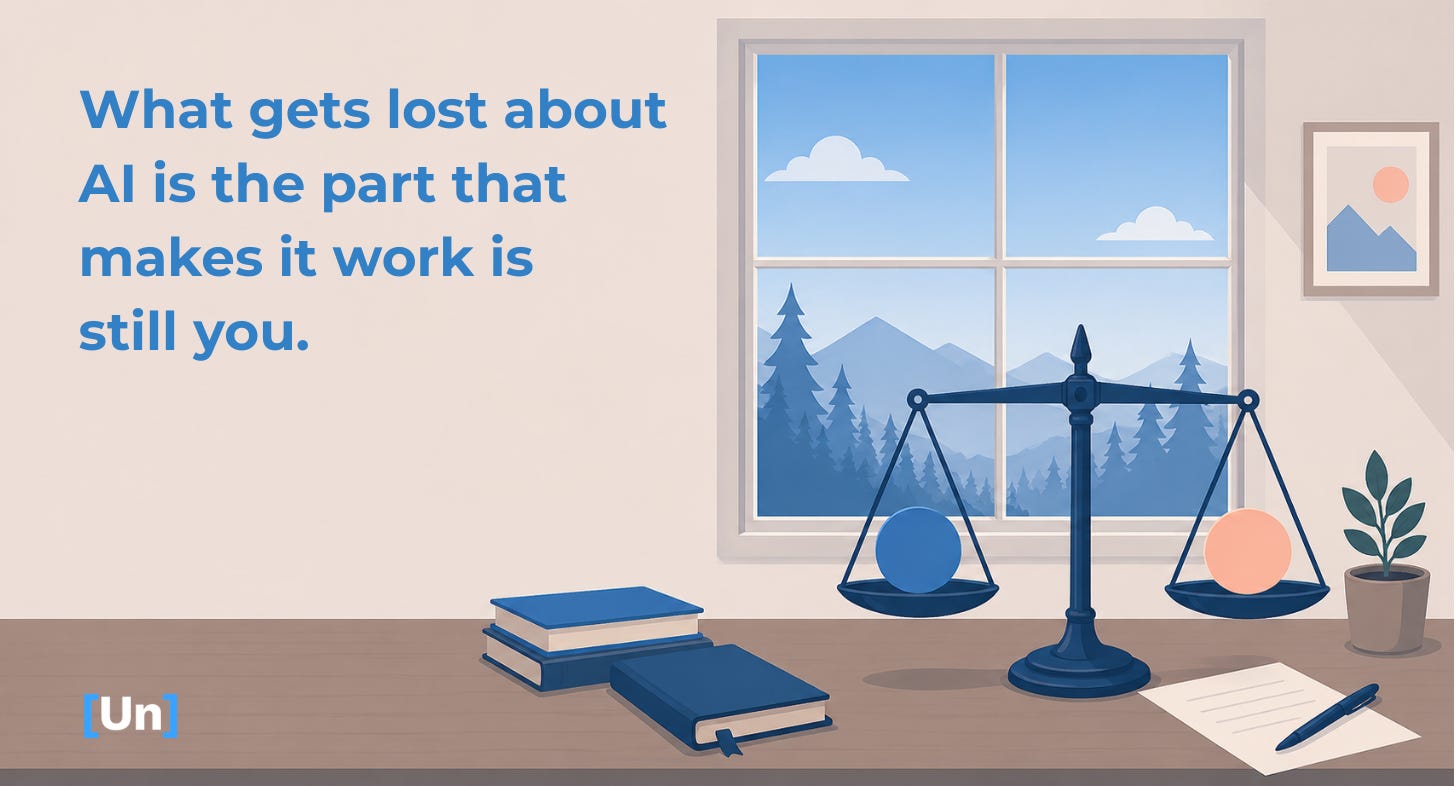
But what gets lost in every breathless LinkedIn post about AI transformation is this: the part that makes it work is still you.
Early LLMs learned from everything. Every Reddit thread, every bot-generated forum post, every confidently wrong hot take ever published to the internet. Garbage in, industrial-scale garbage out. That hasn’t gone away. These models still don’t know what truth is. They know what’s probable, and that’s why what you feed them matters more than anything else.
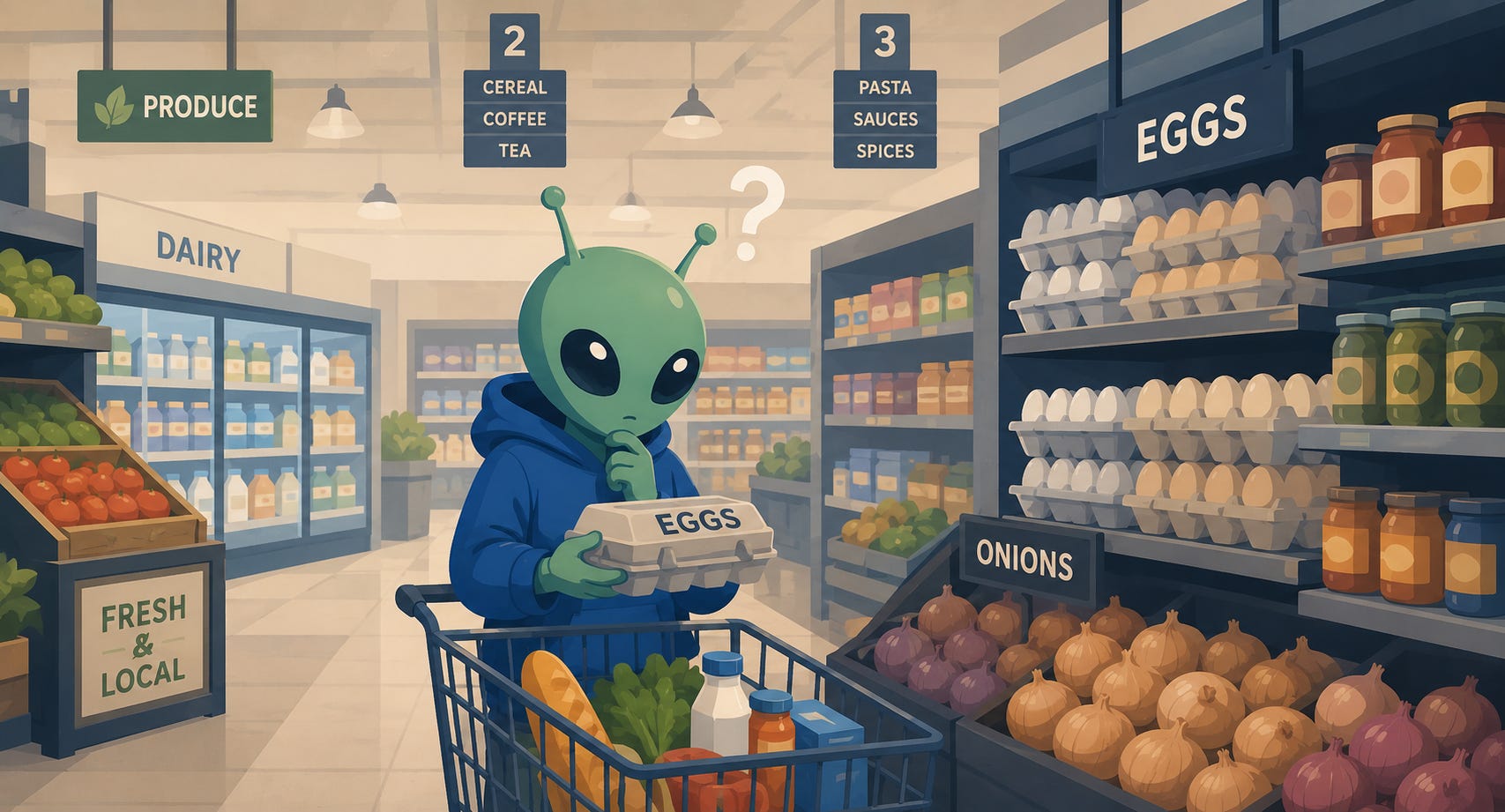
I think about it like this: an LLM is more like a helpful little alien you’ve sent to the grocery store. It wants to help, but doesn’t know the difference between an egg and an onion. The way it learns that an egg has a hard shell and comes in a carton, while an onion has a papery skin and lives on the shelf—that’s the context you give it. Without that context, it’s guessing. And it will guess confidently.
Today I’m a Principal Customer Success Manager (CSM) at Gainsight (the company that wrote—and continues to write—a lot of the CS playbook) managing a strategic book of business in the eight figures. My accounts are some of the largest enterprise customers in the world. And the biggest names on my list are asking the exact same question as the scrappiest startup CSM I know.
Not “should we.” Not “is this real.” But, “How do I stay relevant in this new ecosystem?”
Let’s Be Honest, The Job’s Changed
The job has changed, but not just in the ways you see on your LinkedIn feed.
The manual execution, like writing the Timeline entry in Gainsight, formatting the internal Slack update, chasing Call-to-Action (CTA) hygiene across fifteen accounts—that’s moving. What’s staying with you is the context. You know the customer meeting last Tuesday was tense even though the notes look clean. Or the executive sponsor just changed and the health score hasn’t caught up yet. You decide which flag is noise and which one you need to have a call about at 8 am.
The system can draft the update, but it cannot know what the update should mean.
The human didn’t get removed from the loop. The human got moved upstream. Away from the manual execution and into the place where judgment lives.
Want more perspectives like this on AI and
retention—straight to your inbox? Subscribe today 👋
What Moving Upstream Looks Like
This concept of “moving upstream” really came into focus when I inherited a new book of business. There had been about eight weeks of overlap with the previous CSM. During that transition period, ownership was technically shared, but in practice it was occasionally unclear who was responsible for what.
I had a status meeting with my customers in two hours. The kind where you’re expected to walk in knowing what’s outstanding, what’s been completed, what’s next, and why it matters. The kind where “let me follow up on that” four times in forty minutes tells the customer exactly where they stand.
I made a lovely pour over cup of coffee, threw some waffles in the toaster, and opened Claude.
What I have connected gives me the full account picture:
Gmail tells me what was said after the meeting.
Calendar tells me what meetings actually happened.
Gainsight tells me what made it onto the record.
Slack tells me what the internal conversation really was.
Notion tells me what the team knew going in.
Linear fills in the product gaps.
In the past, I was the one bouncing between all of those, assembling the picture manually. On a good day that took a few hours, but a real audit would take most of a day. The work was never the writing, it was the gathering.
I ran a monthly account audit skill I’d built across my full connector stack. It pulled thirty days of activity, cross-referenced what had been posted to Timeline, and surfaced the gaps.
Eleven touchpoints. Twenty minutes.
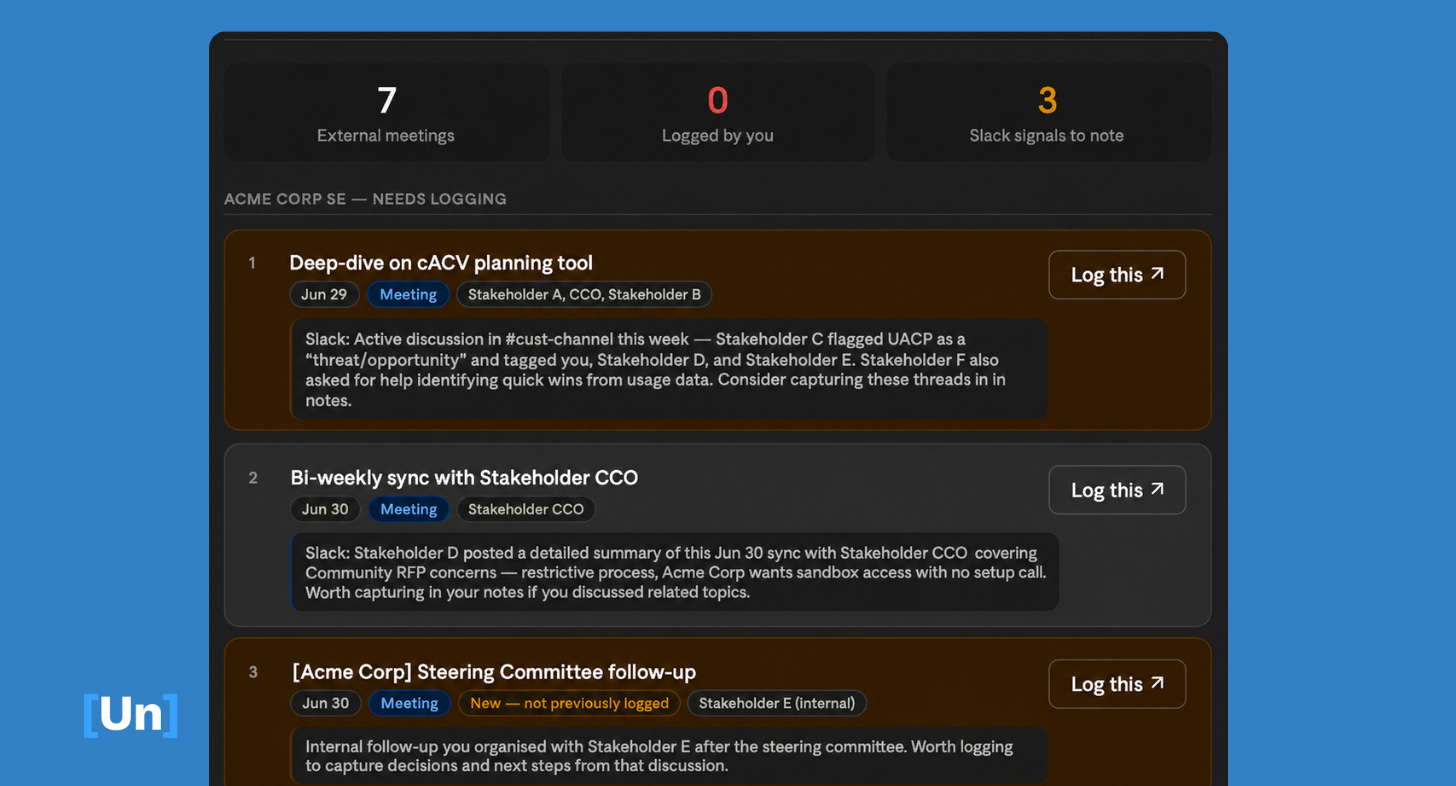
Claude brought each one to me with a recommendation and an approval step. It knew where each one belonged, such as which updates needed to go to Timeline, which ones were tied to specific Success Plan actions, which ones needed to be logged as milestones. It wasn’t treating Gainsight as one big bucket. It understood the architecture of the tool and routed accordingly.
For five or six of the suggested updates it stopped entirely: I’m missing context here. I don’t see a transcript for this meeting. I don’t see a follow-up email. Can you fill this in? And in one case it went further: it looks like this project needs a follow-up task—want me to add it to your dashboard?
Closing the Gap, Not Just Surfacing It
I read every update, catching what was wrong or incomplete and deciding what went out under my name. For someone still learning the Gainsight platform and figuring out when something is a milestone versus a Success Plan action versus a Cockpit task, it wasn’t just doing the work. It was showing me how the work was supposed to be done. It led me to the ‘how’ instead of just carrying out the action.
By the time I got on that call two hours later, I knew exactly where we were. Not because I’d spent the morning buried in tabs, but because I’d spent twenty minutes on the part that actually required me.
The meeting was productive. With the insights from Claude, we were able to talk about what was next, not where we were.
What the AI Couldn’t Know
A lot of the AI conversation assumes that if the machine can do the task, the human becomes less important. The update gets written, the entry gets posted, the gap gets closed, and your job shrinks a little each time.
That’s wrong.
When I was sitting in that Claude approval queue, I wasn’t proofreading. I was the only person in that loop who knew certain things had already happened. A decision made in a meeting that had nothing to do with the account name. A conversation that lived in a Slack DM that never mentioned the customer. Details settled offline, in the hallway, over a call that wasn’t logged anywhere the system could find.
The alien can only see what it has access to. It doesn’t know what it doesn’t know. Without a human in that seat who actually knows the account, the people, and the history, those gaps don’t get caught. The updates appear complete and the Timeline seems clean, but somewhere downstream, something breaks because a conversation that was closed in a hallway got reopened in a customer meeting.
What I didn’t expect was what catching those things would feel like.
I came into this role carrying real doubt about whether I could provide value this early. Would I know enough? Were my relationships deep enough? Then I sat in that approval queue and I knew things the system didn’t. I could give direction, close loops, and look at a suggested update and say, “No, that’s already been handled, here’s what actually happened.”
The approval process didn’t just improve the output. It showed me I was already adding value I couldn’t see yet.
Finding My Place in the Loop
I spent time early on thinking the goal was to get the workflow right and build something complete enough that it would just run. I understand now more than ever that the workflow is never done. It reflects what you know in the present. The context you fed it and the data you connected today. The moment you stop tending it, it starts drifting from the truth.
The skill is just a template. That’s the most important thing I can tell you about building any of this.
What I’ve actually gotten better at isn’t building workflows. It’s the thing only a human can do: notice what’s happening and provide that unique context. Remembering the cell phone call or offhand conversation that was never caught.I’m more deliberate now about capturing those moments because I know the system can’t get there without me.
That’s the job now. Not knowing every answer before the customer asks. It’s always been “I don’t know, let me find out.” What’s changed is I have a very capable alien helping me find out faster, so I can spend more time on the part that I can make a valuable impact on.
What Leadership Needs to Understand
Telling your team to “be confident” isn’t a strategy,and right now, a lot of leaders are doing exactly that. They’re handing CSMs a growing book, an expanding tool set, or a ship that adds a new deck every quarter, and saying, “trust the process.”
But the process is still being built in real time by the people you’re asking to be confident while they build it.
The most valuable thing you can do right now isn’t roll out another tool. It’s to create the space for your team to be honest about what’s working and what isn’t. Not in a QBR slide, but in a real conversation. Because the CSMs who are figuring this out aren’t doing it in your dashboards. They’re doing it at 7 am in a personal Claude window before a customer call. And that work deserves to be seen, supported, and built into the actual process.
Retire the things the tools are replacing. Give people permission to experiment without the fear of getting it wrong. Ask whether the load actually got lighter or just changed shape.
The alien needs context to work. So do the people managing it.
You’ve Got This. Because You’ve Always Had This.
The grocery list got bigger. There are features you haven’t learned yet, integrations you didn’t ask for, and customers who will ask you something tomorrow that you won’t know the answer to.
That’s always been part of the CSM role.
“I don’t know, but I can find out” has always been the skill. The curiosity, the relationships, the ability to read a room and know what a customer actually needs—that was always you, not the tools.
The alien may help you manage a bigger list, but you need to keep it fed by staying in the loop. Don’t forget who’s actually running the ship.

Jon Johnson is a CSM through and through—which apparently includes co-hosting 100+ podcast episodes with Josh Schachter, co-founding a newsletter, publishing a poetry collection called Oaxaca for Sushi, and making records in a home studio between account reviews. He works in Customer Success the same way he does everything else: like someone who has something to say and too many formats to say it in.