![[Un]Churned by Gainsight](https://substackcdn.com/image/fetch/$s_!7AoO!,w_120,h_120,c_fill,f_webp,q_auto:good,fl_progressive:steep/https%3A%2F%2Fsubstack-post-media.s3.amazonaws.com%2Fpublic%2Fimages%2Ffe2167ac-0bcf-4575-9712-8d5ef3588851_300x300.png)
![[Un]Churned by Gainsight](https://substackcdn.com/image/fetch/$s_!hKlf!,e_trim:10:white/e_trim:10:transparent/h_72,c_limit,f_auto,q_auto:good,fl_progressive:steep/https%3A%2F%2Fsubstack-post-media.s3.amazonaws.com%2Fpublic%2Fimages%2Fe14b36dd-52b9-48a3-9f93-3f6a459d55ff_1344x256.png)
![[Un]Churned's avatar](https://substackcdn.com/image/fetch/$s_!vkJ0!,w_108,h_108,c_fill,f_webp,q_auto:good,fl_progressive:steep/https%3A%2F%2Fsubstack-post-media.s3.amazonaws.com%2Fpublic%2Fimages%2F0464ad30-26c2-4f32-b429-ae4283dd5586_200x200.png)
The thing about explorers is that they’re never actually the first to see something. They’re the first to make sense of a discovery for the age in which it’s found.
Take National Treasure, for example. Nic Cage’s character isn’t just following a trail of clues. He’s the descendant of the people who encoded that knowledge in the first place. He spent his life learning the history that ultimately led him to find the treasure hidden by his ancestors.

Why are we using a National Treasure metaphor? Well, this year, Gainsight’s Pulse 2026 conference had an exploration theme that extended far beyond the thrilling keynote intro video or the fun graphics lining the hallways.
The people who mapped Customer Success (CS) and post-sales strategy in the first place are still active practitioners and leaders, and they were at Pulse 2026. These were the folks who built CS before it had a name and figured out by trial and error what retention actually requires, who are now watching AI surface everything they spent 15 years proving.
The real story of Pulse 2026 is that the map-makers are still in the room, and they’re the ones who know exactly where to point the tools. Here’s how the lessons of the past are paving the way for post-sales evolution in the age of AI.
1. The People Who Proved CSMs Work Are Proving AI Does Too.
In 2010, Frank Auger split HubSpot’s customer base into two cohorts just to prove that Customer Success Managers (CSMs) moved the churn number. He didn’t have a playbook or benchmarks. He had a hypothesis to prove and a controlled experiment with which to do so. This willingness to dive into the unknown and make discoveries through trial and error is how the post-sales discipline was built.
We’re seeing this instinct come into play as AI adoption takes off in CS and revenue teams. The people who built the function aren’t waiting for definitive frameworks before they act. Brad Casemore and the PartsSource team hypothesized that AI works best after the operating system is in place. So they spent 18 months building a closed-loop intelligence system before even touching agentic capabilities. Only once that foundation was solid did they layer in the Atlas renewal agent for their long tail.
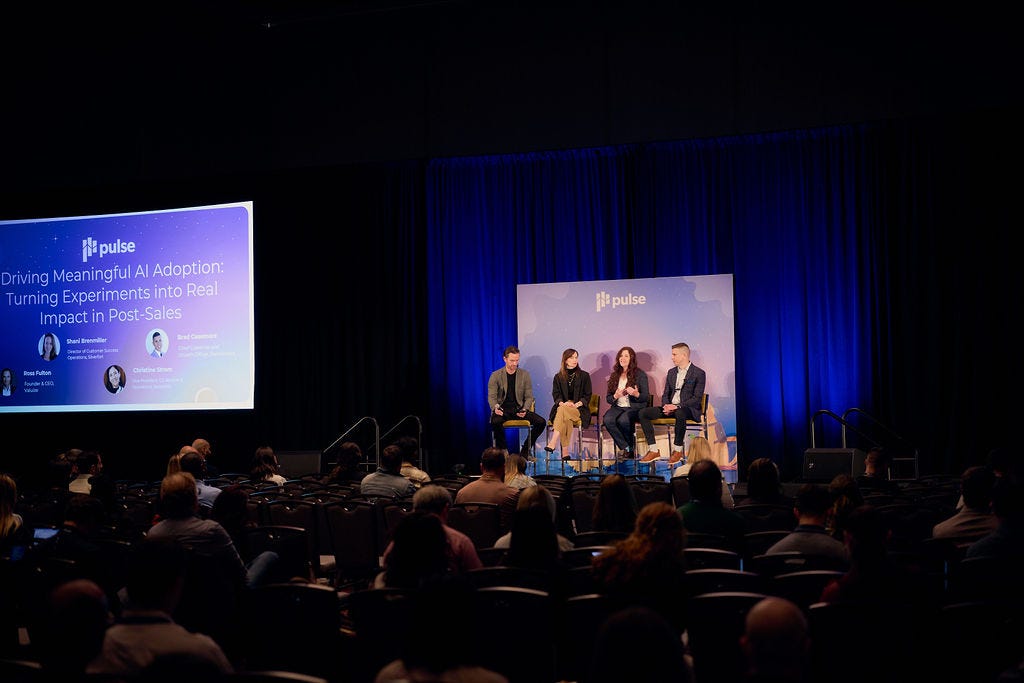
Their methods mirror Frank’s—understand the signal, build the play, measure it, then scale. Teams like CivicPlus are running the same kind of experiments with their conversation intelligence. The stakes may be higher, but the tools in our belt make us faster and the CS leaders paving the way aren’t waiting for permission to figure out how to use them.
2. We Know the Signals. Now We Can Act on Them.
Over the years, CSMs have been knowledge gatherers, carrying customer conversations and signals that didn’t fit into platforms. Extreme politeness masking a negative sentiment. Offhanded comments that show that a customer was, in fact, well informed of a competitor’s pricing and capabilities. These are some of the examples Bob London (Bob London LLC) shared in his session on critical listening. In the past, these signals didn’t make it to the health score and because this knowledge lived in the CSM’s head, once they left, so did those insights.
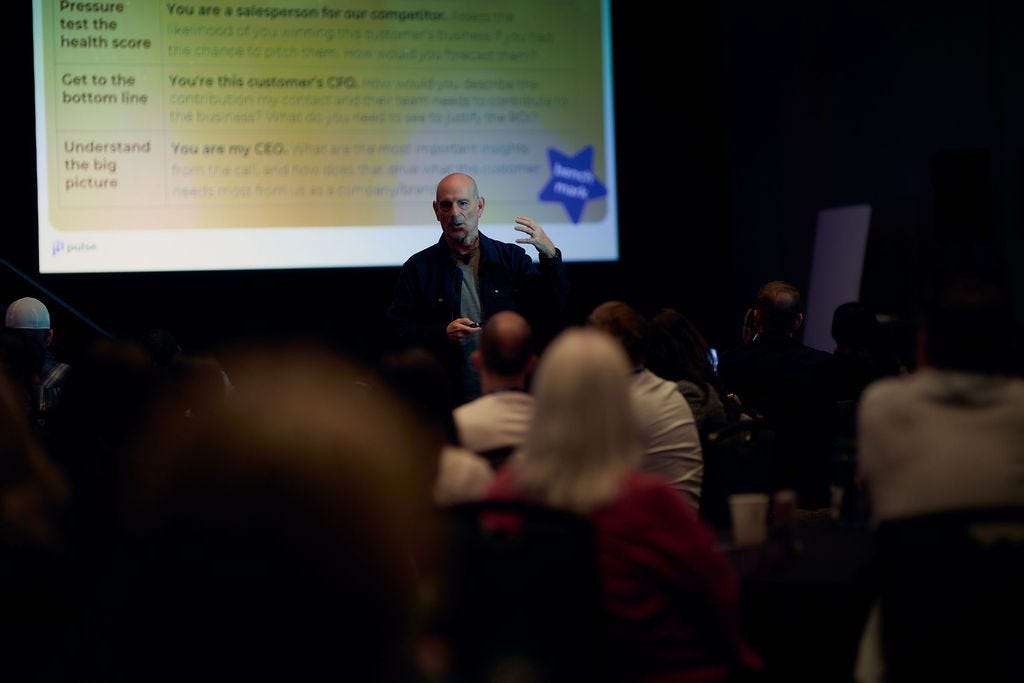
Now, we can marry the CSM’s well-honed skill of identifying these signals, with AI’s ability to capture them at scale. The context that used to live in one CSM’s memory can now be surfaced, queried, and extended across an entire book of business. As Christine Storm (Securonix) said in her panel, “No CSM has the time to do the archaeological digging necessary to go through Confluence, Jira, support tickets, the Gainsight stuff. There are so many sources of information and so many people that have the information in their head.”
Post-sales veterans know these signals intimately, and they’re the ones who will chart the course to operationalizing them at scale.
3. We’re Building and Buying.
The concept of build vs. buy has plagued post-sales teams since the early days of SaaS. With the decision to build comes flexibility and the need for internal upkeep, while choosing to buy comes with speed and institutional knowledge, but product constraints. For fifteen years, post-sales leaders have been navigating that tradeoff by stitching together point solutions, waiting on roadmap queues, and making peace with the gap between what the software did and what the business needed.
This discussion showed up everywhere from the mainstage to the hallways this year at Pulse. In his keynote, Gainsight CEO Chuck Ganapathi offered a new way of thinking: “You’re forced to choose between the freedom, and the pain, of vibe coding something from scratch; or the shackles of inflexible software and living with its limits. At Gainsight, we think that framing is fundamentally wrong. Because the future is not build or buy. It’s both.”
IBM’s VP of Customer Success Kim Humphrey put the practitioner version of that argument on stage, saying, “We absolutely could have built everything ourselves. The real question wasn’t can we build, it was where do we uniquely differentiate versus where it makes sense to accelerate.” In this case, IBM used Gainsight as the CS foundation and built differentiated workflows on top using watsonx.
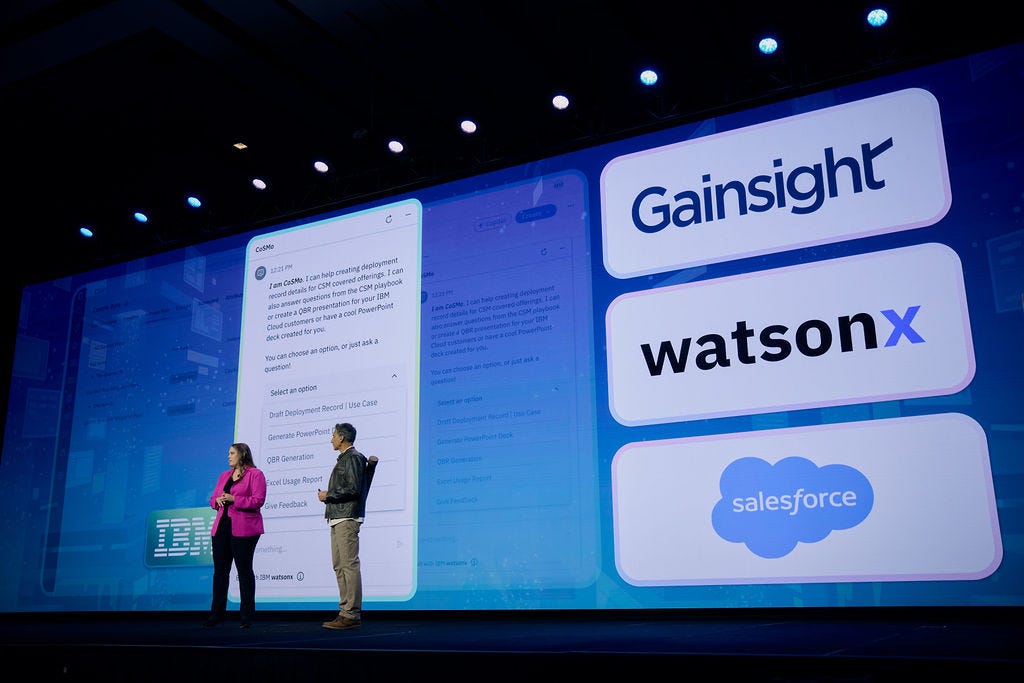
Knowing what can be built and what needs to be bought is what post-sales veterans have either been thinking about themselves, or guiding their customers through. What Pulse 2026 surfaced is that the tradeoff itself is now optional. The post-sales teams best positioned to take advantage of that are the ones who spent the last decade knowing exactly what they’d build if they ever got the chance.
For the long tail specifically, there’s a third path that sits outside the build/buy question entirely: Hire. Chuck explores this in depth on a recent [Un]Churned podcast episode.
4. We always bet on human connection. AI is proving us right.
Customer Success was built on a thesis that most of the enterprise software world perceived as a “soft skill.” We’ve since proved that this act of building the relationship between a vendor and a customer and nurturing it carefully over time was itself a business asset. The pioneers of the discipline staked the whole function on that belief, but often without the data to back it up at board level.
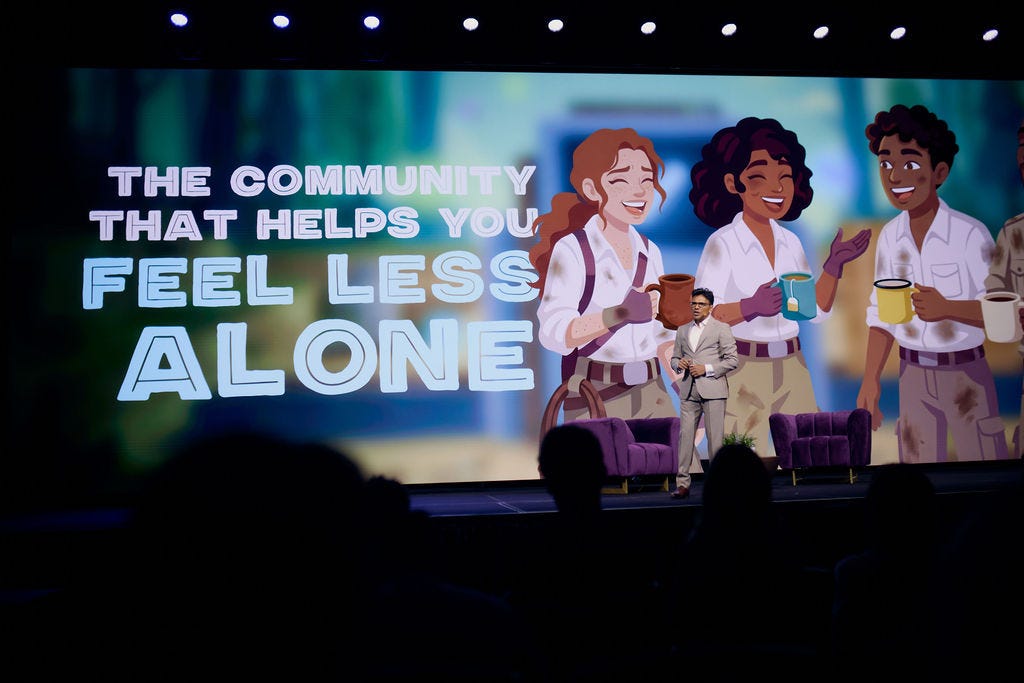
This year, Chuck closed out Pulse 2026 by citing a behavioral economist who asks, “In a world where AI makes more things easier to produce, what becomes scarce? Human connection.” While Pulse 2026 showed the myriad ways AI is shaping post-sales strategies, it also shone a light on the discoveries we’ve made about where the human-in-the-loop needs to stay, well, in the loop.
What actually got handed to AI across every demo, case study, and panel at Pulse were aspects like:
handoff summaries
meeting prep
EBR decks
risk detection
renewal motions
support deflection
Every single thing that moved to an agent was administrative, analytical, or retrieval-based. Across sessions like Driving Meaningful AI Adoption: Turning Experiments into Real Impact in Post-Sales, Afraid of AI? Your Team Isn’t, and The Fast Track to Value: How Cribl CS Orchestrates Digital, Human, and Agentic AI, the teams describing their AI deployments all arrived at the same goal in almost identical language: free up the humans for the work that actually requires them.
Through the process of elimination, AI has proven the original Customer Success bet. Every time an agent takes something off the to-do list, what remains is the relationship building and judgement calls that still require a real-life, actual human.
The Exploration Continues.
There’s a lot of discussion about the old world versus the new, and as AI touches every corner of our work and life, it’s hard not to feel like we’re operating in an entirely different environment. What Pulse 2026 showed us is that while the technological change is real and rapid, post-sales strategy is still true to its roots.
The people who got us here will help move us forward, and alongside the next generation of practitioners and thought leaders, together we’ll make sense of what Customer Success means in an AI-native world. To see all the sessions from Pulse 2026, explore the Pulse Library.